
Which Fashion Jewellery Lasts Longer in India's Climate? 316L Stainless Steel vs Brass Jewellery
While buying metal jewellery the first question that comes in your mind is which is fashion piece will not lose its lustre quickly- Brass or stainless steel?
Explore our Anti-Tarnish Jewellery Collection designed for everyday wear.This article talks about a detailed comparison between the two of the most widely used materials for fashion accessories and daily wear collections- 316L Stainless Steel & Brass Jewellery
So, what offers more bang for buck? Here’s a Basic Comparison
What is 316L stainless steel?
316L stainless steel is a better-quality material because it is extra resistant to rust, corrosion and tarnishing. It is the ideal component for quality jewellery. It contains chromium, nickel and molybdenum which makes it durable enough for everyday wear while retaining its sheen. The letter ‘L’ stands for low carbon (resistant to rust & discolouration).
Browse our Best Sellers Collection featuring premium PVD-coated jewellery. This allows them to become even more durable.
What Is Brass Jewelry?
Brass is an alloy of primarily copper and zinc. For decades, it has been used in jewellery because it affordable, easy to shape and gives a warm, gold-like, vintage-inspired aesthetics. It is easy to cast.
Brass reacts naturally with air moisture and perspiration. The reason it oxidizes over time. If it is not coated with good-quality coating/plating, it can get tarnished and darkened while leaving a green mark on the skin.
Which Material Has Better Durability in 2026?
Discover durable everyday styles in our Chains Collection.
It offers much better resistance to sweat, humidity, rain, and normal wear than brass does. As Indian weather is humid and summer is long, there is usually no need for high maintenance of shiny stainless steel jewellery. While brass jewellery can also last well, it usually needs more care and occasional polishing to keep its finish.
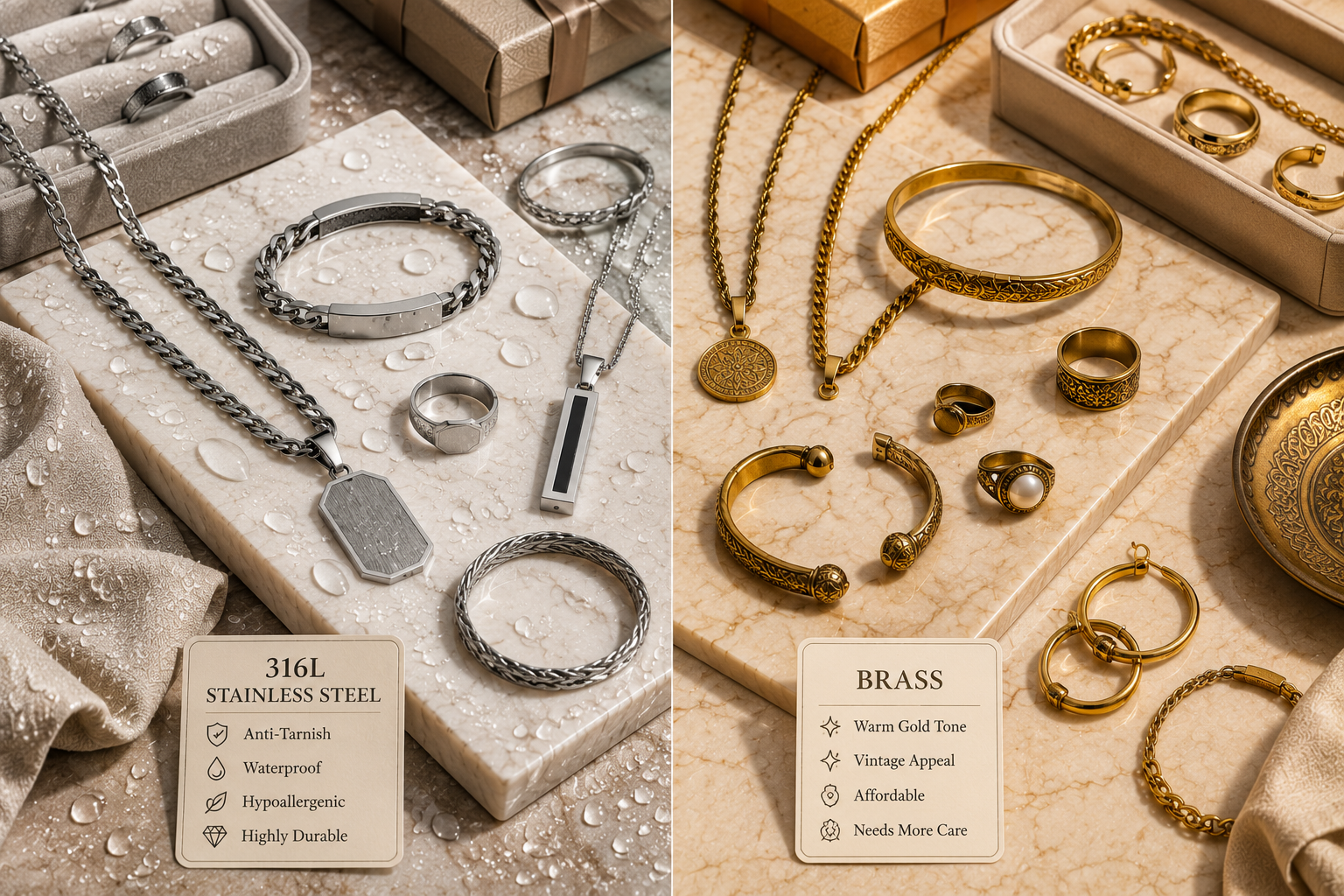
Below is the comparison table between 316L stainless steel vs. brass jewelry from multiple angles —
Table of Comparison
|
Category |
316L Stainless Steel Jewellery |
Brass Jewellery |
|
Tarnish Resistance |
Highly resistant to rust, tarnish and corrosion |
Can tarnish and oxidise over time, especially in humid weather |
|
Maintenance |
Low maintenance; requires only occasional cleaning |
Requires regular polishing to maintain its shine |
|
Durability |
Extremely durable and scratch-resistant |
Softer metal; more prone to scratches and wear |
|
Daily Wear |
Ideal for everyday use, including office and travel |
Better suited for occasional wear |
|
Water & Sweat Resistance |
Performs well against sweat, rain and humidity |
Moisture can speed up tarnishing if the coating wears off |
|
Skin Friendliness |
Generally hypoallergenic and suitable for sensitive skin |
May cause skin irritation or leave green marks on some skin types |
|
Cleaning |
Easy to clean with a soft cloth and mild soap |
Needs special polishing products to restore shine |
|
Colour Retention |
Retains its finish for years, especially with PVD coating |
Gold plating or coating may fade with frequent use |
|
Best For |
Everyday jewellery, anti-tarnish collections, long-term use |
Fashion jewellery for occasional styling and statement pieces |
|
Overall Lifespan |
Longer-lasting with minimal care |
Shorter lifespan if not maintained properly |
Which is better for sensitive skin?
Explore our Bracelets Collection crafted for everyday comfort. The quality material is often used to make medical instruments since it is safe on the skin and unlikely to cause irritation when made to standards. When its protective coating wears off, brass jewellery can cause reactions to the skin of some people.
Which One Should You Choose?
For everyday wear, travel, office use and weathering India’s changing climate, one can invest in the better option and choose 316L stainless steel jewellery. It offers a long rest period before new cleaning, and more cleanliness’.
Brass is a good material for fashion-forward statement pieces which are worn occasionally. But brass generally needs more care to preserve its appearance.
Expert tip: If you live in India's hot, humid or coastal climate, 316L stainless steel jewellery with a premium PVD coating is generally the better choice.
While buying fashion jewellery, always check for the quality and brand.Looking for jewellery that lasts through everyday wear? Explore Tanishtra's Shop All Jewellery Collection featuring premium 316L stainless steel chains, pendants, bracelets and rings designed for lasting shine.
FAQ
Is 316L stainless steel better than brass for jewellery?
For everyday wear, 316L stainless steel generally offers better resistance to tarnishing, corrosion and scratches than brass.
Does brass jewellery tarnish?
Yes. Brass can oxidise over time, especially in humid conditions, and may require regular polishing.
Is 316L stainless steel suitable for sensitive skin?
316L stainless steel is widely used because it is generally well tolerated by many people, though individual sensitivities can vary.
What is PVD-coated jewellery?
PVD (Physical Vapour Deposition) is a coating process that helps improve durability, colour retention and resistance to everyday wear.